19 October 2026
Our Version of Circular
Our Version of Circular
How a small leather offcut became the beginning of a collaboration
Circular thinking can sound like a very big idea.
But often, it begins with something small.
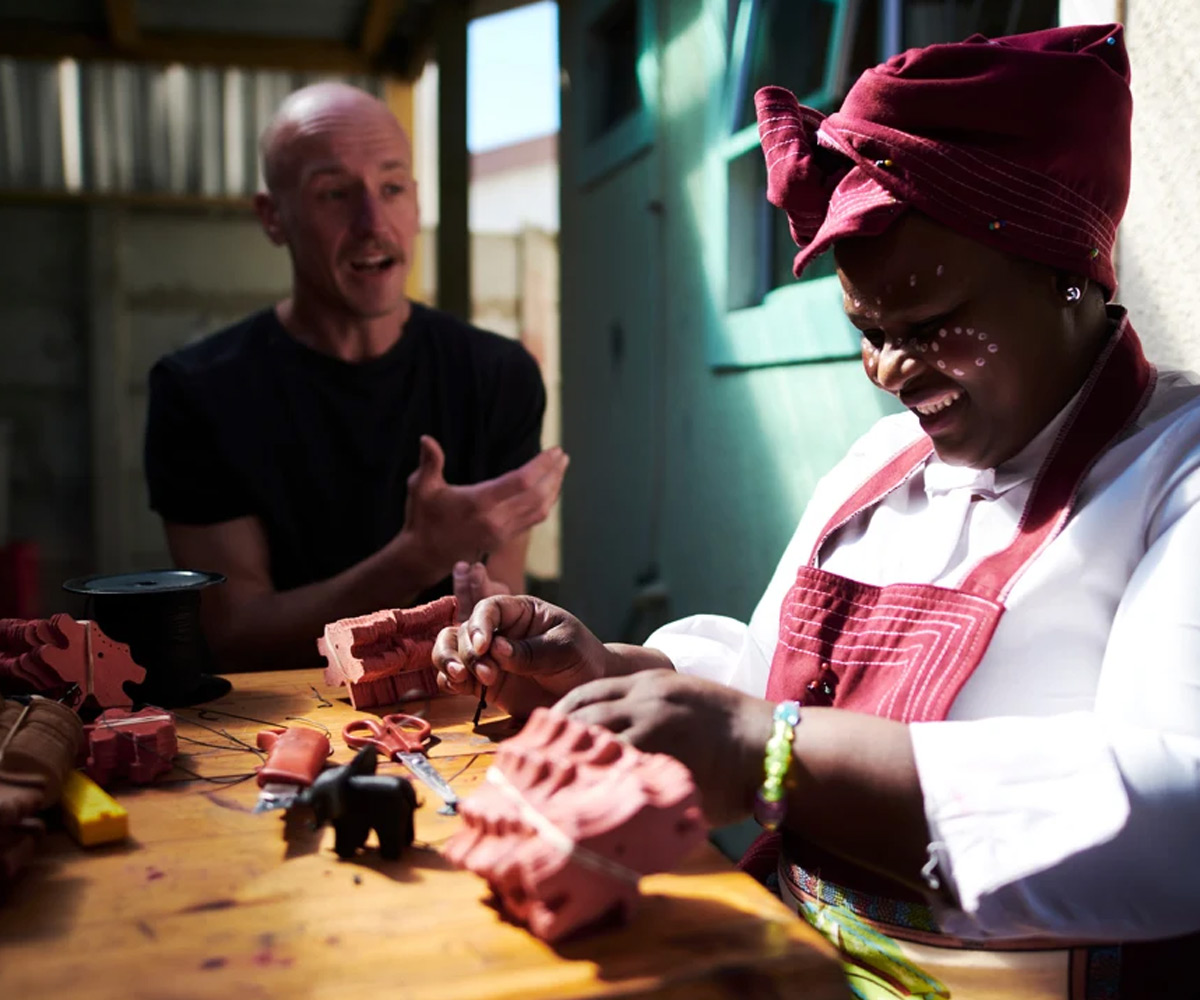
Our collaboration with Vincent from Afrographic started when he approached us about using the hide and leather offcuts left behind during the making of our bags.
These pieces were too small to become another handbag, but the material itself had lost none of its value. Each piece still carried its natural markings, texture and character. It simply needed a different idea.
For us, that is where circular thinking begins.
Not only with the material, but with the willingness to look at what remains and ask: what else could this become?
Too small for a handbag. Too precious to waste.
When working with natural materials, no two hides are the same. Their markings, textures and small irregularities form part of their identity.
This individuality does not disappear when a pattern is cut. It remains in the pieces left behind.
We have always believed that our materials are precious. Respecting them means looking beyond their first intended use and finding thoughtful ways to work with as much of each hide as possible.
Vincent saw possibility in the smaller pieces.
In his hands, the offcuts were cut, shaped and hand-sculpted into little leather elephants. Each one retained the character of the original material and carried the unmistakable hand of its maker.
No two were exactly the same.
What may once have been overlooked had become something worth keeping.
When two design worlds meet
The best collaborations are not simply two names placed beside one another.
They happen when one person’s way of seeing creates new possibilities for another.
Lindiwe brought the materials, the bags and the offcuts created through our manufacturing process. Vincent brought his imagination, humour and ability to give small pieces of leather an entirely new personality.
Together, these different skills transformed leftover material into the little elephant adornments now found on our THULA bags.
The elephants were not designed as an afterthought or added simply as decoration. They became part of the collection’s story: a meeting of people, materials and ideas.
The distinctive markings of the zebra hide make every bag individual. Vincent’s hand-sculpted elephants carry that individuality even further.
Each combination is different because the materials are different and because every elephant is made by hand.
Circularity is also about collaboration
Circular design is often discussed in terms of reducing waste, reusing materials and extending their useful life.
All of that matters.
But our experience with Afrographic reminded us that circularity can also be human. It can come from sharing materials, exchanging skills and allowing someone else to see potential in what your own process leaves behind.
The offcuts existed because we make bags. The elephants exist because Vincent imagined another use for them.
Neither idea stands entirely on its own.
The collaboration created value from a material that could no longer serve its original purpose while supporting another local maker and bringing a new layer of meaning to the finished product.
That is the kind of circular thinking we believe in: practical, creative and grounded in what is already in our hands.
More than using what remains
Using an offcut does not automatically make a product meaningful.
The new object still needs to be considered, beautifully made and worthy of the material used to create it.
This matters to us.
Circularity should not feel like a compromise or a lesser version of design. At its best, it asks more from design. It requires us to work within the shape, size and character of the material available and to find an outcome that feels intentional.
Vincent’s elephants do exactly that.
Their charm comes partly from their differences. A marking may fall across the ear of one elephant and the body of another. One may be slightly darker, softer or more textured than the next.
The material helps determine the final character.
Rather than trying to remove those differences, the design celebrates them.
A small beginning
Our collaboration with Afrographic began with a very simple interaction.
We had offcuts that were too small for handbags but too precious to waste. Vincent had an idea for what they could become.
That exchange became a collection detail, a relationship between local makers and a more thoughtful use of our materials.
It also became a reminder that circular thinking does not always begin with a complex system.
Sometimes, it begins with someone looking at a small piece of leather and seeing an elephant.